Choosing a Toothpaste Abrasive System & RDA Position
The abrasive is not a commodity line item. It interacts with the active system, gel clarity, flavour load and the abrasivity position you intend to claim.
Toothpaste cleans through a balance of abrasion, surfactant action and detergency. Changing the abrasive changes more than the cleaning feel: it can change whether the formula can be a clear gel, which fluoride sources remain compatible, how much flavour oil the base will hold and what the finished viscosity does on a filling line.
For private label buyers, the practical question is not "which abrasive is best" but "which abrasive system supports the claim, the sensory target and the evidence expected in my market". Answer those three together and the formula choice usually narrows itself.
01Silica-based and calcium-based systems
Hydrated silica systems are commonly chosen where gel clarity, fluoride compatibility and a broad range of texture targets matter. Calcium-based systems (including dicalcium phosphate and calcium carbonate) behave differently on opacity, mouthfeel and active compatibility. Neither is universally superior: each supports a different product position.
| Axis | Why it constrains the abrasive choice |
|---|---|
| Clarity | Clear gel, opaque paste or striped presentation — set this before the base is chosen. |
| Active system | Fluoride source, desensitising actives, whitening agents and their compatibility with the base. |
| Sensory | Grit, foam, flavour release, mouthfeel and aftertaste. |
| Abrasivity position | Target RDA band and the test evidence your market or retailer expects. |
| Processing | Viscosity, mixing behaviour and filling-line performance at the intended pack size. |
02Treat RDA as a documented position, not a slogan
Relative dentin abrasivity is a measured property with a defined method. If a low-RDA or sensitivity position is part of your claim, agree the target band and the test method before the base is locked, and make sure the resulting report is part of the document pack requested at quotation stage.
- Specify the target abrasivity position alongside the intended market — the accepted method can differ.
- Ask whether the report is issued per formula or per batch.
- Re-check the position if flavour, colour or active load changes after compatibility work.
- Keep the test report with the written specification, not in a separate email thread.
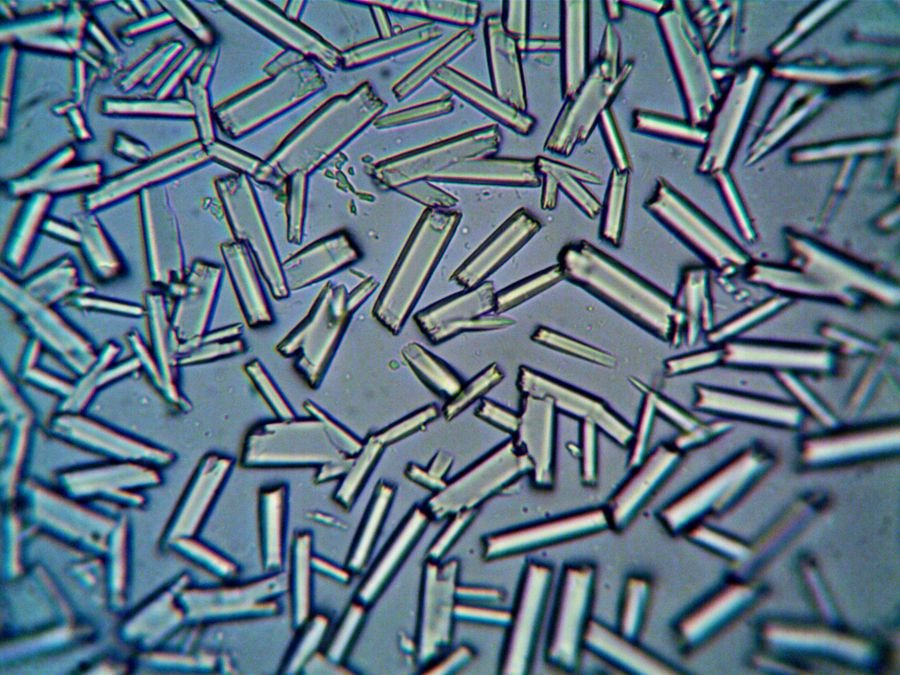
Illustration note: the polarised micrograph on this guide's cover shows crystalline particles for context. It is a reference image, not a photograph of a specific abrasive lot or test result.
03Where programmes lose time
The most common delay is fixing the marketing claim before the base is chosen, then discovering the claim needs a different active or a different abrasivity band. The second is changing flavour or colour after compatibility has been validated, which forces a repeat of stability and release checks.
Looking for low-RDA sensitive formulas? Explore our toothpaste OEM range, where fluoride, sensitivity, whitening and children's positions are configured as separate specification decisions.
04Briefing a sensitivity or whitening position
Sensitivity and whitening are commercial positions before they are formula instructions. A sensitivity brief needs a target abrasivity position, the method behind it and the active system that supports the claim. A whitening brief needs to say whether the effect comes from abrasion, optical agents or another route, because each has different compatibility, packaging and label consequences.
- State the intended claim and destination market together, not in separate emails.
- Name the actives under consideration and any ingredients that must be excluded.
- Agree which test report will support the position and who issues it.
- Re-open the review if claim wording changes after artwork approval.
Write the claim, the supporting evidence and the market into the written brief before any base is selected.
05What changes when the base is rebalanced
Lowering abrasivity by cutting abrasive load alone can weaken cleaning, foam and texture. Rebalancing usually involves abrasive type, particle distribution and rheology together — and that changes mixing behaviour, filling torque and the finished viscosity profile. Treat the rebalanced base as a new specification version rather than a minor tweak.
| Area | What to re-check |
|---|---|
| Cleaning and sensory | Grit, foam, flavour release and aftertaste can all move with the abrasive blend. |
| Active compatibility | Fluoride and desensitising actives may need re-validation after a base change. |
| Processing | Viscosity and filling behaviour should be checked at the intended pack size. |
| Evidence | The abrasivity report must be reissued against the new specification version. |
Repeat stability in the intended pack and confirm dosing on the target tube diameter; the approval gates show where a reformulation has to be re-approved.
Questions buyers ask on this topic
Short answers before you write your specification.
Can I specify a low-RDA sensitivity toothpaste?
Yes. Brief the target abrasivity position and the destination market together; both determine which base systems and test evidence are appropriate. The position is confirmed in the written specification before sampling.
Does changing flavour or colour affect an approved abrasive system?
It can. Flavour oils and colourants may interact with the base and active system, so a change after validation usually means repeating compatibility and stability checks. Record the change in the specification revision log.
Can I change the abrasive system after a sample is approved?
Yes, but it is a specification revision rather than a line-side adjustment. Compatibility, stability and filling checks are repeated where relevant, the abrasivity evidence is reissued, and the revised sample is approved again before a batch is scheduled. Timing is confirmed in writing with your quotation.
Have a specification to review?
Send your brief and our technical team will come back with feasible options and an approval plan.